By Samantha Wirth
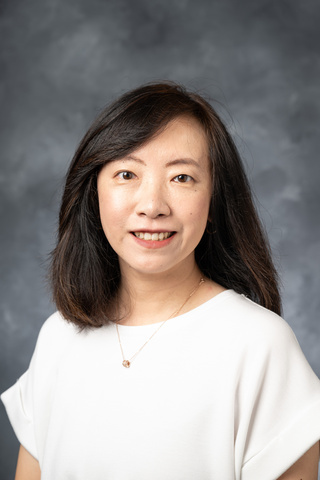
May Guo, PhD, FGSA, associate professor at the School of Social Work, has long worked to advance the field of aging. Guo’s research focuses on minority aging, immigration, social determinants of health, and mental and cognitive health in later life stages, and her extensive work in the field of gerontology led to her recognition as a fellow by the Gerontological Society of America.
When Guo observed that aging-related issues remained relatively understudied from an intersectional perspective—one that considers how multiple identities and social conditions shape peoples’ lived experiences across the life course—she joined fellow scholars Lisa S. Wagner, PhD and Chanda Mehrotra, PhD, FGSA to update a long-standing academic textbook. The textbook, titled, Aging and Diversity (4th ed.), expands on Wagner and Mehrotra’s 3rd edition of the text and includes resources that allow students to translate their academic knowledge into real-world practice, preparing them to serve older adults across a variety of contexts and communities.
This new edition of Aging and Diversity includes insights on topics such as artificial intelligence, health inequities, caregiving, and changing family and work patterns among older adults. Additionally, the textbook examines how multiple aspects of identity shape the aging experience, illustrating experiences differ across identities such as race, ethnicity, socioeconomic status, sexual orientation, gender identity, and religious affiliation.
“An intersectional perspective is essential because aging is not a uniform experience—it's shaped by the complex interplay of multiple identities and social locations,” Guo said.
Analyzing aging from this view is essential to helping practitioners, policymakers, and researchers create fairer and more culturally informed services that meet the growing needs of an increasingly diverse aging population. “Our book highlights how intersecting factors shape both challenges and opportunities in later life, revealing both vulnerabilities and strengths of different groups of older adults that a single-factor view would miss,” Guo said.
A community of support
To strengthen the most recent version of Aging and Diversity, Guo gathered feedback from fellow Iowa faculty members Mercedes Bern-Klug, Lorraine Dorfman, Motier Haskins, and Miriam Landsman. “[The School of Social Work] has been incredibly supportive, providing a collaborative environment with dedicated colleagues and institutional resources,” Guo said. “The school’s emphasis on research, teaching, and community engagement—along with its strong gerontology focus—creates an ideal setting for this kind of interdisciplinary work.”
Advancing careers in gerontological social work
For Master of Social Work (MSW) students who are passionate about understanding human aging and interested in pursuing a career in gerontological social work, Guo recommends the Graduate Certificate in Aging and Longevity Studies. The certificate includes 12 credit hours of coursework across bio-psycho-social aspects of aging, end-of-life care, and health promotion.
MSW students can declare aging as an area of focus in their program. Through this area of specialization, students can immerse themselves in evidence-based, person-focused training in this growing field.